Vietnam Motorbike Tours 2027: The Ultimate Guide to Riding Vietnam
There is no better way to discover Vietnam than from the saddle of a motorbike. While buses and trains rush you past the good stuff, two wheels let you slow down, turn off onto the road less travelled, and ride straight into the heart of the country. If you are dreaming about Vietnam motorbike tours in 2027, this guide is built to get you from idea to engine-on, with everything you need to plan a safe, unforgettable adventure.
From the cloud-wrapped passes of the far north to the long, storied spine of the Ho Chi Minh Trail, Vietnam delivers some of the most rewarding riding on the planet – and at a price that makes Europe and the Americas look like daylight robbery. Below you will find the best routes, the right bikes, the ideal season, honest cost estimates, and a clear method for choosing an operator you can actually trust. Let’s plan your ride.
Why Take a Vietnam Motorbike Tour in 2027?
Vietnam has earned its reputation as Southeast Asia’s premier motorbike destination, and the momentum is only building as we head into 2027. A few things set it apart.
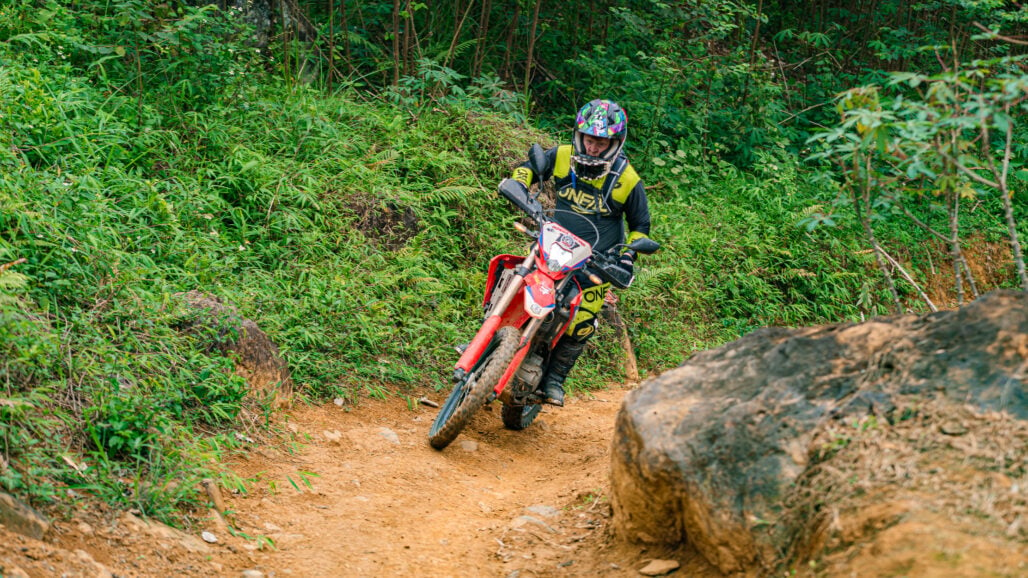
First, the sheer riding variety. In the space of a single week you can carve smooth, sweeping mountain passes, grind up technical off-road trails, and cruise quiet valley roads past rice paddies and water buffalo. The landscapes change constantly – one day you are surrounded by towering limestone karsts, the next by emerald rice terraces stacked up the mountainsides like staircases for giants.
Second, the value. A guided adventure in Vietnam includes a quality bike, an expert local guide, homestays, meals and a support crew for a fraction of what a comparable trip costs almost anywhere else. Your travel budget stretches remarkably far, and on a well-run guided tour, a good share of that spending flows straight into the rural communities you pass through.
Third, the human connection. A motorbike pulls you off the tourist conveyor belt and drops you into the real Vietnam. You will share a meal with a Hmong family, sip rice wine in a village that rarely sees outsiders, and trade waves with kids running alongside the road. These moments – not the landmarks – are what riders talk about for years afterward.
If you have been putting this trip off, 2027 is the year to stop waiting.
The Best Time for Vietnam Motorbike Tours in 2027
Get your timing right and Vietnam rewards you with clear skies and grippy roads. Get it wrong and you are battling heat, mud and washed-out mountain passes. Since most of the best riding is concentrated in the north, the northern climate should drive your planning.
The sweet spot runs from September through April, when northern Vietnam is generally dry, the air is clear, and road conditions are at their safest. Here is how the riding year shapes up for 2027:
September to November (autumn). For many riders, this is the best window of all. The rice harvest paints the terraces of Mu Cang Chai and Hoang Su Phi a brilliant gold, the heavy rains have eased, and the temperatures are comfortable. It is also peak season, so lock in your dates and operator early.
December to February (winter). Dry and clear, with dramatic, moody mountain light – but genuinely cold at altitude around Ha Giang and Sapa. Pack proper layers and you will be rewarded with quiet trails and far fewer crowds.
March to April (spring). The landscapes turn green again and the weather warms up, offering excellent conditions before the wet season rolls in. Another strong choice for a comfortable, scenic ride.
May to August (summer and wet season). Hot, humid and prone to sudden downpours that can turn dirt sections slick and occasionally close mountain roads entirely. Riding is still possible, and hardcore enduro riders enjoy the wet-season challenge, but it demands more skill, patience and flexibility.
The short version: for golden rice terraces, aim for late September into October 2027. For dry, crisp, crowd-free riding, the winter months are superb if you do not mind the cold.
The Best Vietnam Motorbike Tour Routes for 2027
Most of the country’s iconic rides cluster in the north and launch from Hanoi. These are the routes worth planning a trip around.
Ha Giang Loop
If you ride only one route in Vietnam, make it the Ha Giang Loop. Tucked against the Chinese border in the far north, it serves up the most spectacular scenery in the country: the otherworldly Dong Van Karst Plateau, the heart-stopping Ma Pi Leng Pass, and roads that thread along cliff edges high above winding rivers.
A relaxed Ha Giang loop runs three to five days, with overnight stops in welcoming local homestays. It is accessible to confident beginners on a guided tour, yet a good guide can sprinkle in enough off-road detours to keep experienced riders grinning. It is, quite simply, a bucket-list ride.
Northwest Loop: Sapa and Mu Cang Chai
The Northwest Loop swaps Ha Giang’s stark limestone for lush, rolling rice country and some of the longest mountain passes in Vietnam. Highlights include the famous terraces of Mu Cang Chai, the resort town of Sapa beneath Fansipan (the country’s highest peak), and the spectacular O Quy Ho Pass.
This region blends sealed mountain roads with proper off-road trails, and most operators can crank the difficulty up or down to suit your group. Set aside five to eight days to do the northwest justice.
Northeast Loop: Cao Bang and Ba Be
For riders who want to leave the crowds behind entirely, the Northeast is a quiet gem. The marquee sights are the powerful Ban Gioc Waterfall straddling the Chinese border and the serene Ba Be Lake, the largest natural lake in Vietnam, all linked by empty back roads winding through limestone valleys.
It pairs beautifully with Ha Giang for a two-week northern circuit and suits riders who prize solitude and culture over big-ticket landmarks.
Ho Chi Minh Trail
For a true point-to-point expedition, the Ho Chi Minh Trail is one of Vietnam’s great journeys. Following the country’s mountainous central spine, it weaves together scenic roads, profound wartime history and a genuine sense of going somewhere remote.
Compared with the tight northern loops, the Trail tends to feature flowing roads and bigger daily distances rather than relentless technical climbs – ideal for riders who love covering ground. Longer trips of nine days or more let you ride deep into central Vietnam, often finishing near the historic towns of Hoi An or Hue.
Central Highlands and Coastal Routes
Want to fold in some classic sightseeing? The Central Highlands and the celebrated Hai Van Pass near Da Nang deliver gorgeous coastal and mountain riding. These central and southern routes, often run by partner teams around Saigon and the coast, make excellent add-ons to a northern adventure for riders with extra time.
Choosing the Right Motorbike for Your Tour
The bike under you defines the whole experience, and the best choice comes down to your skill level and how much dirt you want to ride. Reputable operators run well-maintained machines set up specifically for Vietnamese conditions.
Honda XR150L and CRF150L. Light, friendly and forgiving – perfect for beginners or smaller riders, and well suited to mixed road-and-trail loops like Ha Giang.
Honda CRF250L and CRF300L. The do-everything all-rounder and the backbone of most Vietnam tour fleets. Enough punch for confident riders, yet manageable for intermediates, and capable across just about any terrain.
Kawasaki KLX250 and KLX300. A favourite for more technical off-road and single-track, where light weight and nimble handling pay off.
Honda XR400, Yamaha WR250R and similar. For experienced enduro riders chasing extra power and capability on genuinely difficult ground.
If you are booking a guided tour, talk through your ability honestly with the operator. A good company would much rather put you on the right bike than the biggest one. Geared trail and dirt bikes are the way to go for real adventure riding; automatics and scooters exist, but they will not get you where the good stuff is.
Who Are Vietnam Motorbike Tours For?
One of the best things about riding Vietnam in 2027 is how well it scales to your experience. Tours broadly fall into three buckets.
Beginners and first-timers are welcome on plenty of guided trips. Operators provide lighter bikes, keep the off-road gentle, offer basic training, and set a relaxed pace. The Ha Giang Loop on a guided tour is a fantastic first big adventure.
Intermediate riders get the best of both worlds – sealed passes for flow and confidence, plus optional dirt sections to test their skills. Most northern loops are tailor-made for this level.
Advanced and enduro riders can seek out specialists who focus on genuine off-road riding, with harder trails, technical single-track and more capable bikes. If you live for mud, ruts and hill climbs, Vietnam has terrain that will challenge you.
The golden rule: be honest about your experience when you book. A trustworthy operator uses that information to match the route, bike and pace to you – keeping the trip both safe and thrilling.
Guided vs Self-Guided Tours
Early on, you will need to decide whether to ride guided or strike out on your own.
Guided tours are the right call for the vast majority of riders, especially anyone new to Vietnam. A local guide carries deep knowledge of routes, weather and trail conditions, takes care of every logistic – bikes, gear, luggage transport, accommodation and permits – and opens doors to hidden trails and authentic encounters you would never find solo. A support vehicle often trails the group to carry bags and handle any mechanical hiccups. Your only job is to ride and soak it all in.
Self-guided and rental trips offer freedom and a lower price, and they suit confident, experienced riders who are comfortable navigating, handling breakdowns, and dealing with Vietnamese traffic and remote roads. Just go in clear-eyed: putting together a safe, genuine off-road adventure on your own is more work than it appears, with a lot to organise around bikes, gear, insurance and logistics.
For a once-in-a-lifetime trip where you want maximum riding and minimum stress, guided wins. For pure independence on a budget, self-guided delivers.
How Much Do Vietnam Motorbike Tours Cost in 2027?
Vietnam remains exceptional value, even as rising demand has nudged prices upward. Here is a realistic framework for budgeting your 2027 trip.
Fully guided, all-inclusive multi-day tours generally fall in the range of US$160 to US$200 per day, depending on group size, bike, accommodation standard and how remote the route is. Private, one-on-one guiding sits toward the top of that range, while joining a group tour brings the per-person cost down.
That daily rate usually covers a great deal: the bike and fuel, an English-speaking guide, accommodation (often a mix of homestays and local guesthouses), most meals, national park and area permits, and a support vehicle on longer routes. Always confirm exactly what is and is not included before you commit.
Going the rental-only route costs far less per day for the bike itself, but you take on fuel, food, accommodation and all the logistics yourself. Budget-minded riders can do Vietnam very cheaply; riders who want comfort, safety and zero hassle should expect to pay more – and it is money well spent. Note that one-way routes such as the Ho Chi Minh Trail often cost more, since the price has to account for returning the bikes and guide to the start.
How to Choose a Reputable Tour Operator
This is the single most important decision of your trip. The right operator turns a great idea into the adventure of a lifetime; the wrong one turns it into a safety hazard. Here is what to look for in 2027.
A solid track record and recent reviews. Favour operators with years of experience and a deep, current bank of detailed reviews on TripAdvisor and Google. Read past the scenery and pay attention to what riders say about safety, guide quality and bike condition.
Well-maintained, appropriate bikes. Ask which models they run and how the fleet is maintained. Quality operators use modern trail and dirt bikes, properly set up for Vietnamese terrain, and they match the bike to your ability rather than handing everyone the same machine.
Genuinely local, expert guides. The best operators are run and staffed by locals who know the trails, the weather, the language and the culture intimately. This is exactly what keeps you safe in remote areas and unlocks the authentic experiences that make the trip.
Honest difficulty grading. A trustworthy company asks about your experience and tailors the route to match. Be wary of anyone promising hardcore enduro to total beginners, or who brushes off questions about difficulty altogether.
Transparent pricing and inclusions. Good operators are upfront about what is covered and honest if they are not the cheapest option. On Vietnamese mountain roads, the lowest quote is rarely the safest choice.
A real commitment to safety. Confirm they provide quality helmets and protective gear, carry a proper support setup for breakdowns and emergencies, and talk seriously about safety rather than glossing over it.
Vietnam has several long-established specialists, some running off-road tours for two decades or more, and a handful focused specifically on genuine enduro riding on proper dirt bikes. Shortlist two or three, message them directly with your dates, group size and experience level, and notice who responds with the most thoughtful, tailored advice. That reply tells you almost everything you need to know.
What to Pack for Your Trip
Most operators supply helmets and basic protective gear, but bringing some of your own guarantees a better fit and more protection. A sensible 2027 packing list includes:
- A well-fitting full-face helmet with a clear visor, if you prefer your own
- Riding gloves, plus knee and elbow protection – and ideally a back protector or armoured jacket for off-road days
- Layers, because mountain temperatures swing wildly and winter at altitude is genuinely cold
- A waterproof jacket and trousers, even in the dry season
- Sturdy, over-the-ankle boots with good grip
- Sunglasses, sunscreen and lip balm for the strong high-altitude sun
- A small daypack, a power bank and a phone mount if you plan to navigate
- Cash in Vietnamese dong for villages and remote stops where cards are not accepted
Pack light. On guided tours a support vehicle usually carries your main luggage, so you only need the essentials on the bike.
Licences, Insurance and Safety
A few practical realities to square away before you ride in 2027.
Licensing. Technically, you should hold a valid motorcycle licence and an International Driving Permit (IDP) with a motorcycle endorsement to ride legally in Vietnam. Enforcement varies, especially in rural areas, but sorting the correct licence and IDP before you travel matters for legal coverage and – crucially – for keeping your insurance valid.
Insurance. This one is non-negotiable. Make sure your travel insurance specifically covers motorcycle riding, since many standard policies exclude it or only cover smaller engine sizes. Check the engine-capacity limits and whether off-road riding is included. Riding uninsured in a remote mountain region is a gamble not worth taking.
Safety mindset. Vietnamese roads, and the swirling traffic around Hanoi in particular, take some getting used to. Multi-day off-road tours are physically demanding, often involving six to eight hours of riding across challenging terrain, so a baseline of fitness and stamina helps a lot. Ride within your limits, listen to your guide, and keep the goal in mind: coming home with great stories, not injuries.
Sample 6-Day Northern Vietnam Itinerary
To make it concrete, here is how a classic guided northern loop might unfold in 2027. Operators tweak these endlessly, but it captures the rhythm of a trip.
Day 1 – Hanoi to Ha Giang. Leave the city behind, ride or transfer north, run through your gear briefing and get your first taste of mountain roads.
Day 2 – Into the Dong Van Karst Plateau. The Ha Giang Loop begins in earnest amid dramatic limestone scenery, finishing with a homestay welcome from a local family.
Day 3 – Ma Pi Leng Pass. The signature day of the trip, riding one of Vietnam’s most jaw-dropping passes as it clings to the cliffs high above the Nho Que River.
Day 4 – Off-road trails and hidden valleys. Your guide mixes in dirt sections and back roads few tourists ever see, with stops to meet hill-tribe communities along the way.
Day 5 – Mountain villages toward Ba Be. Quieter roads, waterfalls and lakes, with plenty of time to soak up rural life at a gentler pace.
Day 6 – Return to Hanoi. A final scenic ride and transfer back, ending – fittingly – with the unforgettable chaos of Hanoi’s traffic.
Add days to weave in the Northwest Loop, Cao Bang and Ba Be, or extend into a full two-week grand tour of the north.
Frequently Asked Questions
Do I need riding experience for a Vietnam motorbike tour in 2027? Not necessarily. Many tours are designed for beginners and include training and close guidance, while others cater to advanced riders chasing technical enduro. The key is picking a tour matched to your level and being honest with your operator about your experience.
When is the best time to ride? September through April brings the best weather, with dry, clear conditions and safer roads. Late September and October are ideal for the golden rice terraces, while winter is dry and quiet but cold in the mountains.
Is riding a motorbike in Vietnam safe? With a reputable operator, quality bikes, proper gear and a sensible approach, yes. Most risk comes from inexperience, poor equipment and traffic – all of which a good guided tour helps manage. Always carry motorcycle-specific travel insurance.
How many days should I plan? The Ha Giang Loop fits into three to five days. A satisfying northern adventure runs six to eight days, and a grand tour of the whole north or the Ho Chi Minh Trail can stretch to two weeks or more.
Should I go guided or self-guided? For most riders, especially first-timers, guided is the smarter choice – it handles logistics, raises safety and unlocks authentic experiences. Confident, experienced riders comfortable with navigation and breakdowns may prefer the freedom of self-guided.
What bike will I ride? Usually a trail or dirt bike such as a Honda XR150L, a CRF250L or CRF300L, or a Kawasaki KLX for more technical terrain. Operators match the bike to your skill level.
Start Planning Your 2027 Vietnam Motorbike Tour
A motorbike tour through Vietnam is far more than a holiday – it is the kind of journey that resets your sense of what travel can be. The passes, the people, the food and the sheer freedom of the open trail combine into something you will be telling stories about for the rest of your life. And in 2027, there is no better place on earth to twist the throttle.
Settle on your route and dates, pick the right season, choose an operator you trust, and get your licence and insurance in order. Then all that is left is to ride.
Ready to go? Get in touch with your dates, group size and experience level, and let’s build the Vietnam motorbike tour you will never forget.